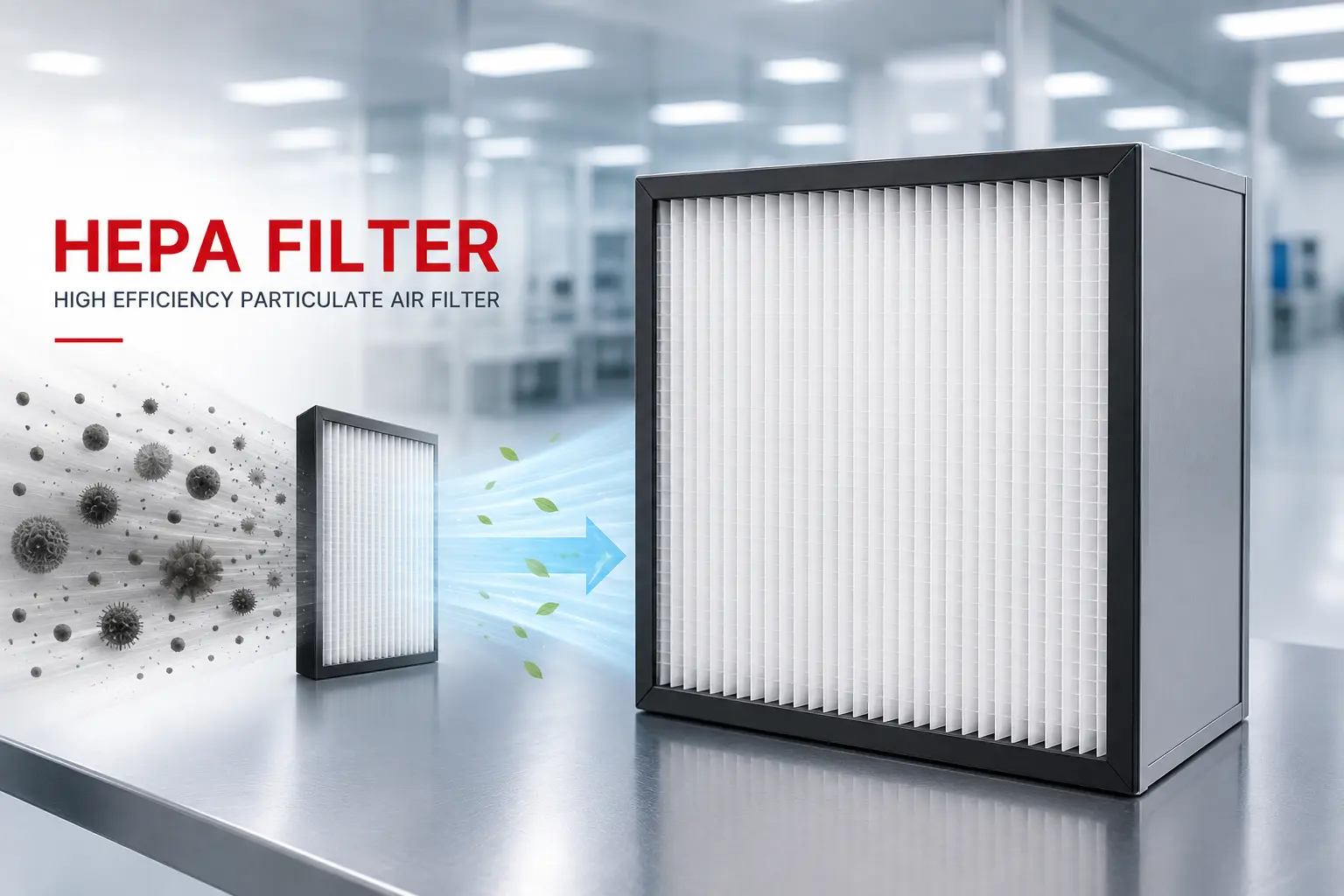
What is HEPA Filter?
HEPA Filter (High Efficiency Particulate Air Filter) is a high performance air filter used to remove fine dust particles, bacteria, fungal spores and aerosol particles from air streams. This is the final filter level in the HVAC system, playing a role in maintaining air quality for clean rooms, hospitals, electronics factories, pharmaceuticals and many industries that require a clean environment.
According to standards EN1822, HEPA Filters are classified based on filtration performance at the most difficult to filter particle size (MPPS). Popular filter levels today include: H13 and H14, with performance ranging from 99.95% and 99.995%.
Outstanding advantages of HEPA Filter
- Effectively removes fine dust PM2.5, PM1.0 and ultra-fine particles.
- Retains bacteria, fungal spores and airborne microorganisms.
- Maintain cleanliness levels according to ISO 14644 standards.
- Protect products and equipment from dust contamination.
- Reduce the load on the HVAC system and improve air quality.
Where is HEPA Filter used?
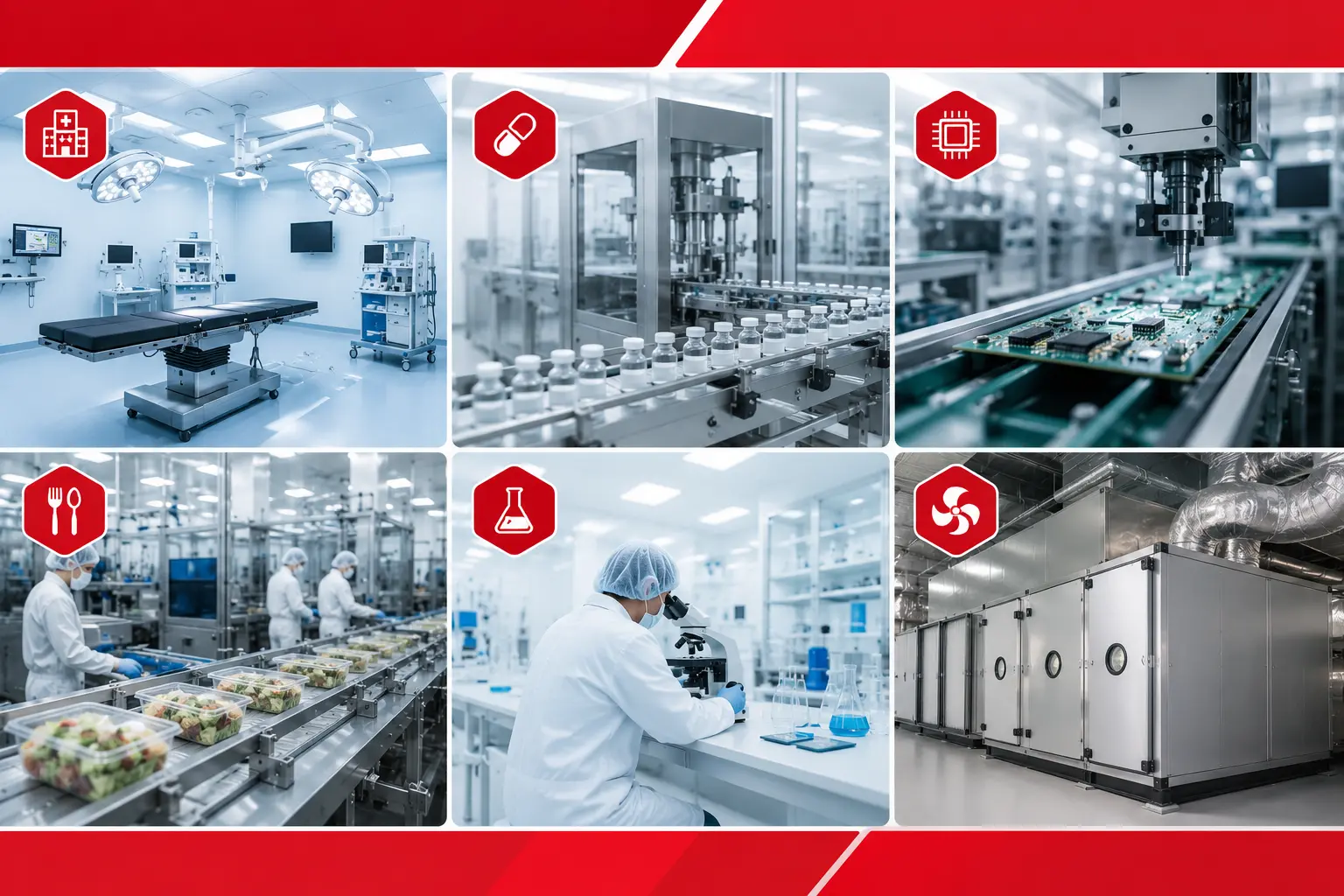
Thanks to its high-performance dust filtration ability, HEPA Filter is used in many fields that require strict air pollution control.
🏭 Electronics & semiconductor factory
Prevent dust from affecting the manufacturing process of chips, electronic components and displays.
💊 Pharmaceutical factory
Meet GMP requirements in the production of drugs, vaccines and medical devices.
🏥 Hospital
Applications in operating rooms, ICUs, isolation rooms and air handling systems.
🍞 Food
Control dust and microorganisms in food processing and packaging areas.
Note from VAF
HEPA Filter is only effective when the correct filter level is selected, installed with correct techniques and combined with primary filter levels (Pre Filter) and fine filters (Medium Filter). Periodic replacement and post-installation tightness testing are also important factors in maintaining the performance of the entire system.
Structure of HEPA Filter
Although there are many different designs, one set HEPA Filter Standards usually include 5 main components: Filter Media, Frame, Separator or Mini Pleat, Sealant and Gasket. Each part directly affects the filtration performance, life and tightness of the filter.
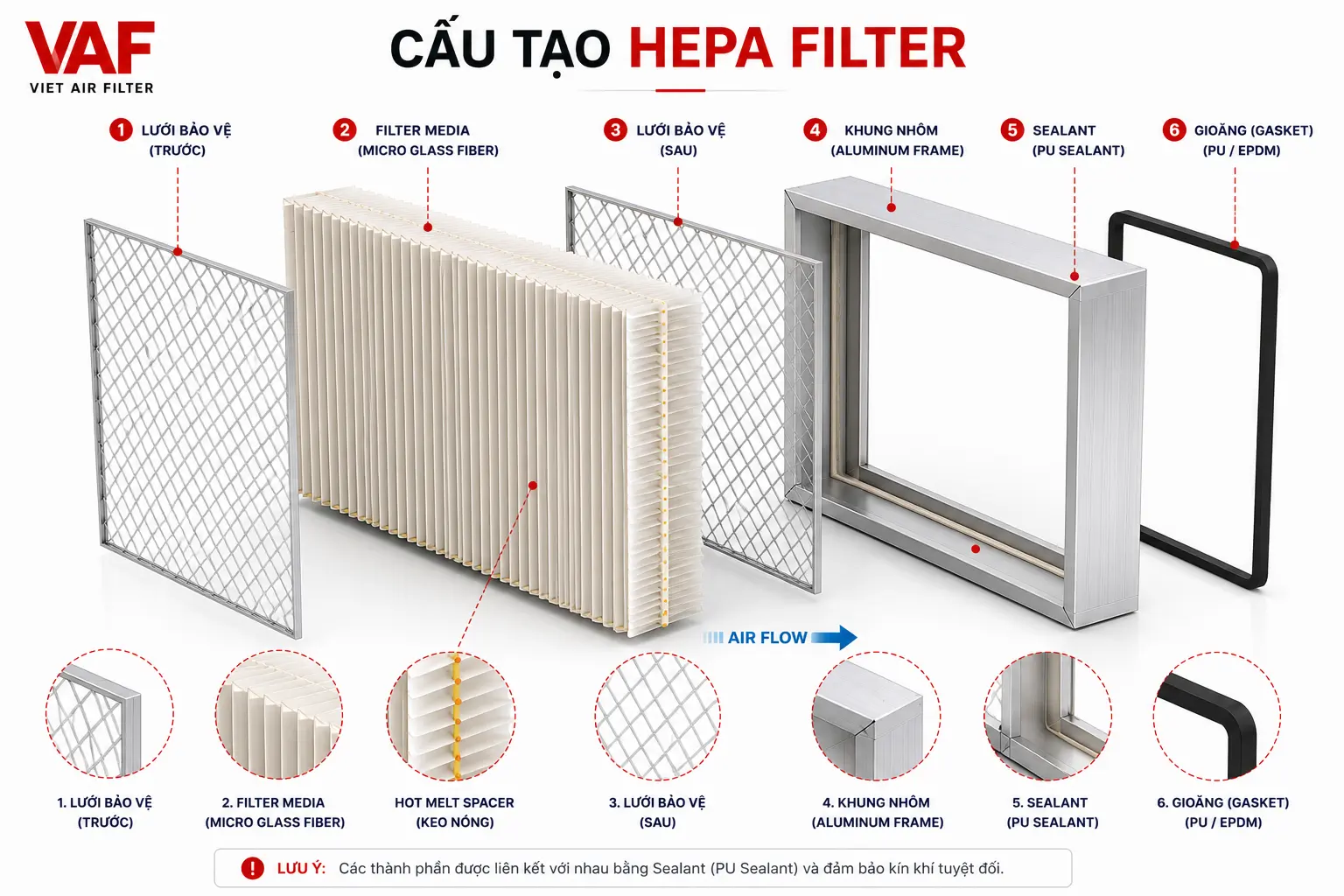
Filter Media
As the main filter material, it is often made from ultra-fine glass fiber (Micro Glass Fiber) or PTFE membrane for some special applications.
Frame
The frame protects and fixes the filter material, which can be made of aluminum, galvanized steel (GI), 304 stainless steel or ABS plastic.
Mini Pleat
The pleats help increase the filtration area, reduce pressure loss and extend the life of the HEPA Filter.
Sealant & Gasket
Ensure absolute tightness between the filter material, frame and installation location, limiting air leakage.
1. Filter Media (Filter material)
Filter Media is the most important part of HEPA Filter. Ultra-fine glass fibers are randomly arranged to form a dense network, which helps trap dust particles through various physical mechanisms.
To increase the filter area without increasing the filter size, this layer of material is folded into many small pleats (Mini Pleat). This design helps increase air flow, reduce pressure differential and optimize operating performance.
Advantages of high quality Filter Media
- High and stable filtration performance.
- The initial pressure difference is low.
- Long lifespan.
- Large dust holding capacity.
- Meets EN1822 standards.
2. Frame (Filter frame)
Frame helps fix the entire structure of the HEPA Filter and protects the filter material during transportation, installation and operation. Depending on the usage environment, users can choose many different types of frame materials.
| Frame material | Characteristic | Application |
|---|---|---|
| Shaped aluminum | Lightweight, corrosion resistant | FFU, AHU, clean room |
| GI | Low cost | Industrial HVAC |
| Inox 304 | High corrosion resistance | Pharmaceuticals, food |
| ABS | Light weight | The environment has chemicals |
3. Mini Pleat
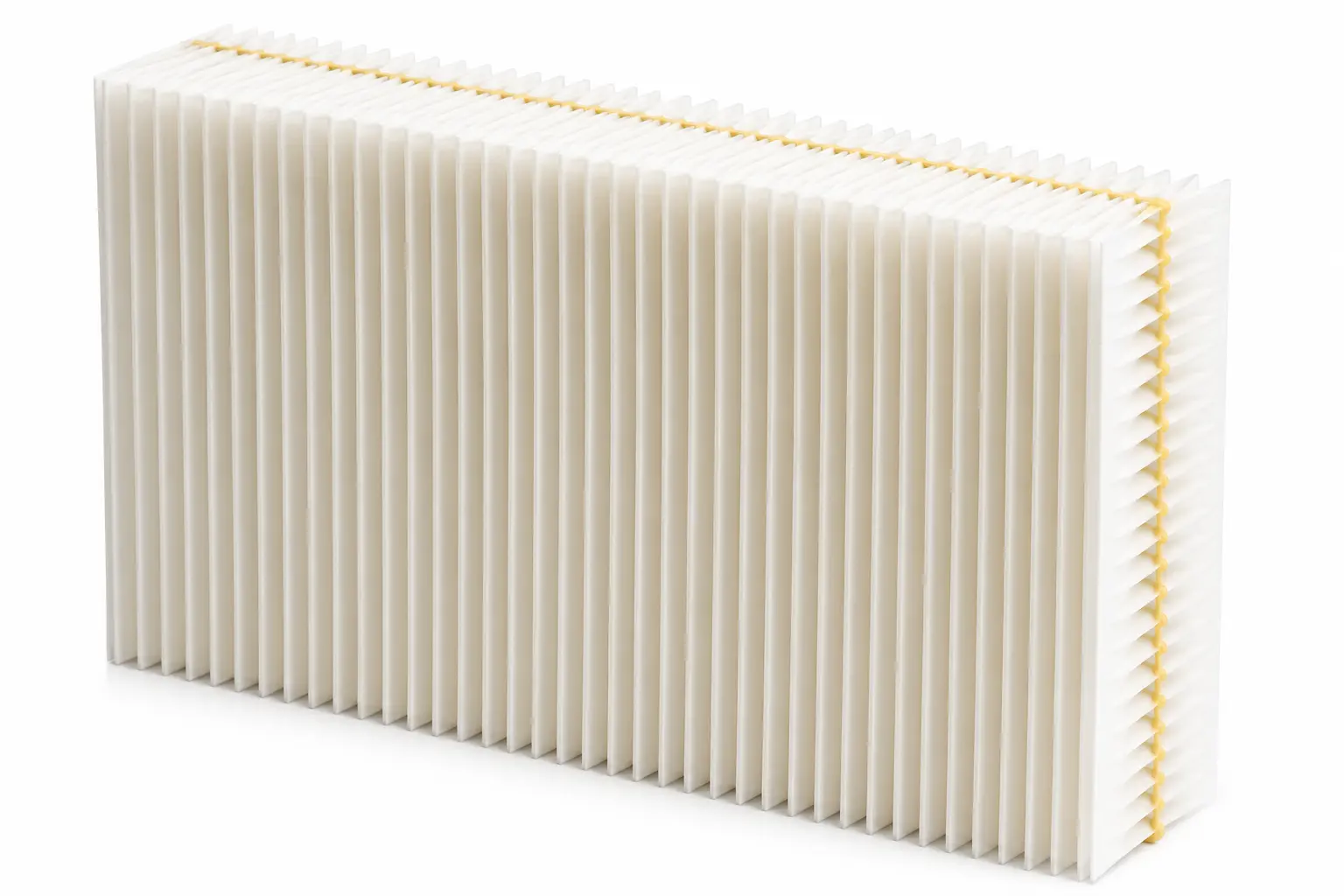
Mini Pleat is a modern pleating technology used on most high-end HEPA Filter lines. Compared to the traditional Separator structure, Mini Pleat helps increase the filtration area, reduce differential pressure and improve the energy efficiency of the HVAC system.
Experience from VAF
For continuously operating HVAC systems, HEPA Filter using Mini Pleat technology should be preferred because it has lower pressure loss, helping to reduce fan power consumption and extend filter replacement time.
Operating principle of HEPA Filter
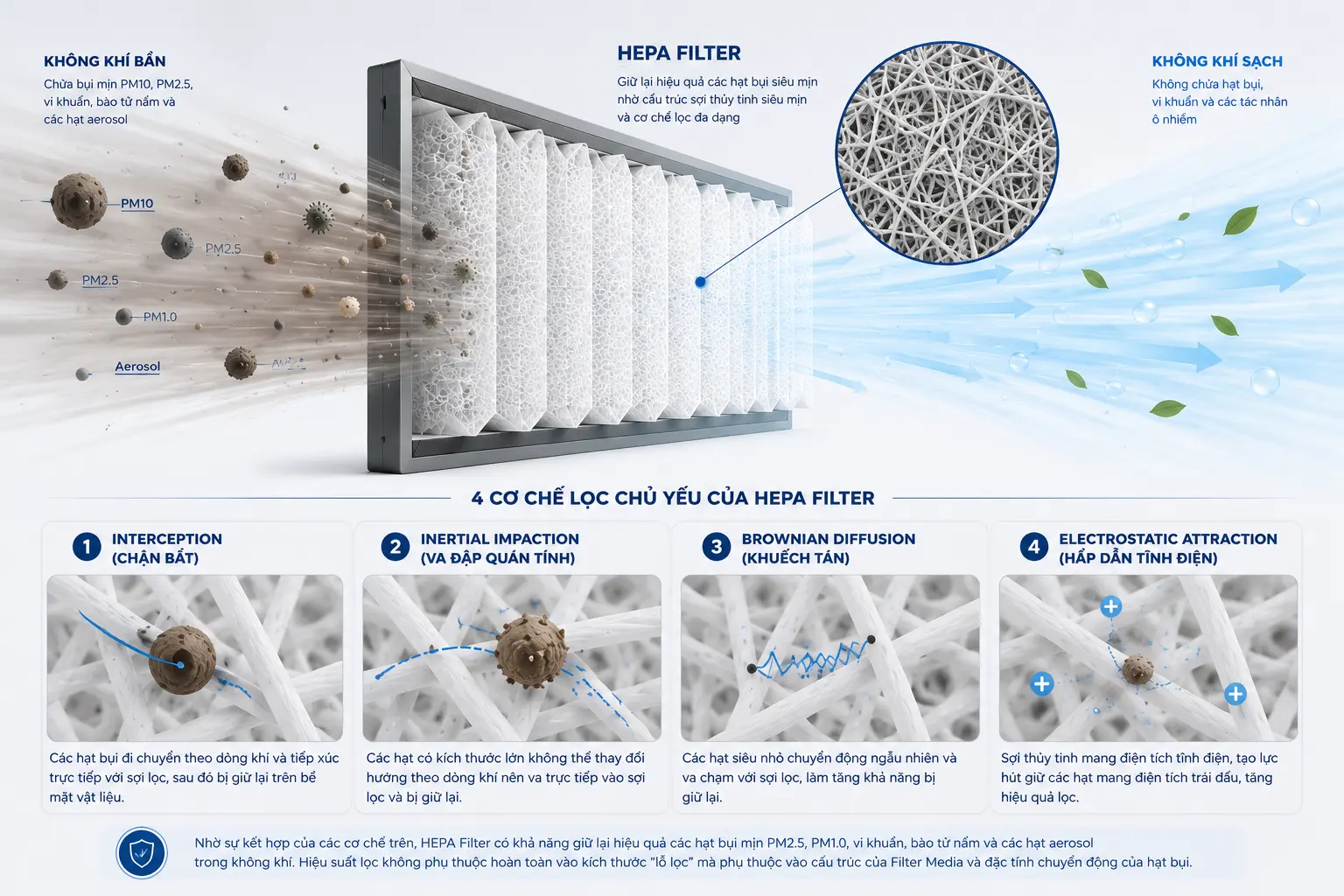
Unlike the popular belief that HEPA Filter acts like a mesh with microscopic filter pores, the filter actually traps dust thanks to a combination of many physical mechanisms. When the air flow passes through the layer Filter Media, dust particles will be trapped through the process of collision, capture and diffusion between ultra-fine glass fibers.
Interception
Dust particles move with the air flow and come into direct contact with the filter fibers, then are trapped on the surface of the material.
Inertial Impaction (Inertial Impact)
Large particles cannot change direction with the air flow, so they hit the filter fiber directly and are trapped.
Brownian Diffusion (Diffusion)
Microscopic particles move randomly and collide with filter fibers, increasing the possibility of being trapped.
Electrostatic Attraction
Some filter materials can help retain charged particles, but this is only a supporting mechanism and not a determining factor in the performance of the HEPA Filter.
Why can HEPA Filter filter very small particles?
Thanks to the combination of the above mechanisms, HEPA Filter is able to effectively retain fine dust particles PM2.5, PM1.0, bacteria, fungal spores and aerosol particles in the air. Filtering performance does not depend entirely on the size of the "filter hole" but depends on the structure of the Filter Media and the movement characteristics of dust particles.
EN1822 standard and HEPA filter levels
To accurately evaluate the performance of HEPA Filter, standard EN1822 Use the most difficult to filter particle size (MPPS - Most Penetrating Particle Size) instead of just relying on the size of 0.3 µm like many popular documents. This is a widely applied standard in the cleanroom industry and high-performance air filter manufacturing.
| Filter level | Performance at MPPS | Application |
|---|---|---|
| H13 | ≥ 99.95% | Clean rooms ISO 7 - ISO 8, electronics, pharmaceuticals |
| H14 | ≥ 99.995% | Operating rooms, hospitals, ISO 5 - ISO 6 |
| U15 - U17 | ≥ 99.9995% | Semiconductors, microelectronics and clean rooms have super high requirements |
Technical note
Higher performance does not always mean better. The choice of H13, H14 or ULPA should be based on the required cleanliness level, air flow, pressure loss and operating costs of the HVAC system. Choosing the right filter level will help optimize efficiency and prolong the life of the entire system.
Compare HEPA Filter H13 and H14
H13 and H14 are the two most commonly used HEPA filter levels today. Both meet EN1822 standards but are selected depending on cleanliness requirements, dust control levels and investment budget.
| Criteria | H13 | H14 |
|---|---|---|
| Performance at MPPS | ≥ 99.95% | ≥ 99.995% |
| Application | Electronics, pharmaceuticals, HVAC | Hospital, operating room, ISO Class 5 |
| Pressure loss | Lower | Higher |
| Expense | More economical | Higher |
Should I choose H13 or H14?
If the system requires a clean room for general electronics, food or pharmaceutical manufacturing, the H13 is often the right choice between performance and cost. For operating rooms, sterile areas or procedures with strict particle control requirements, H14 will be the optimal choice.
When do you need to replace the HEPA Filter?
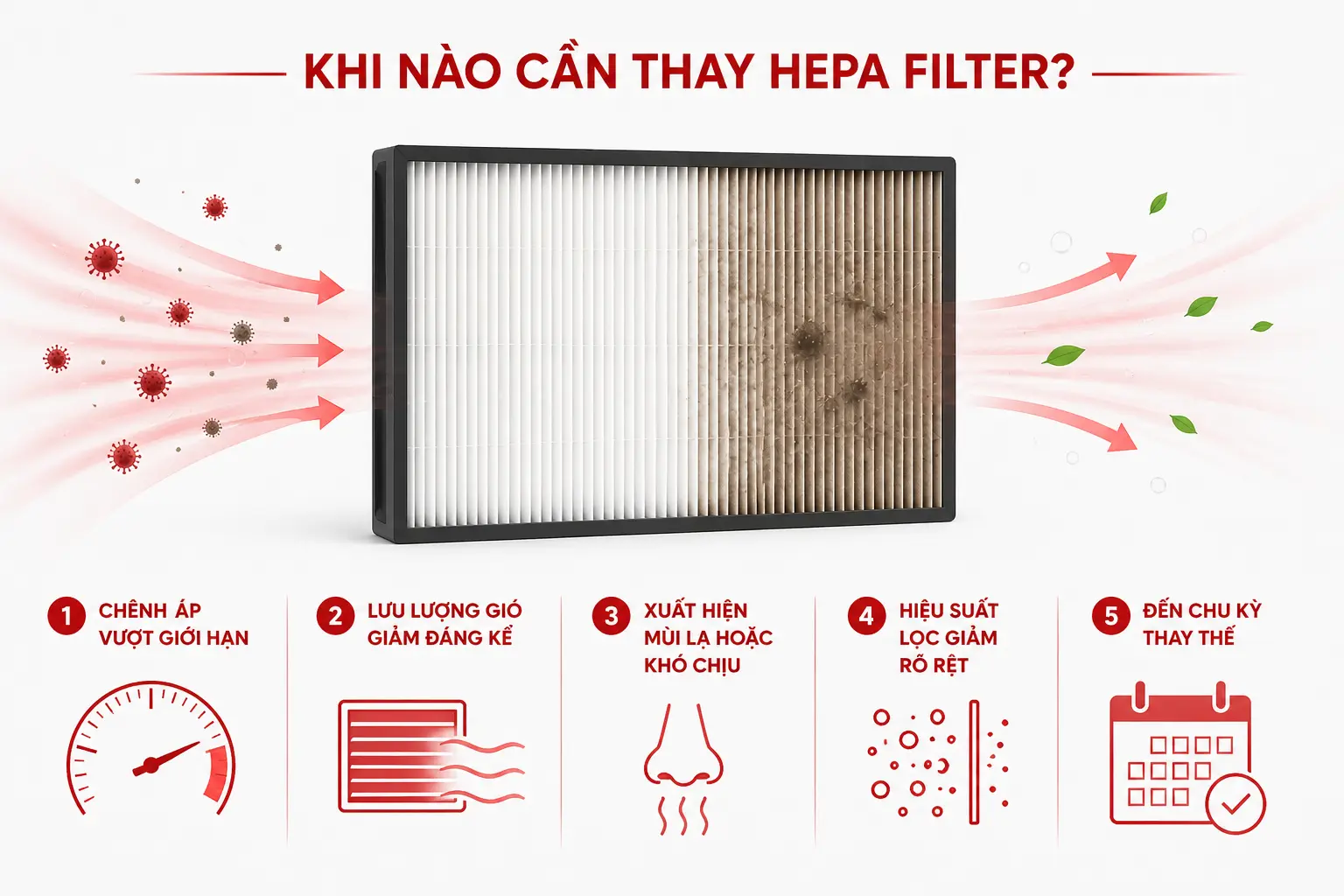
The life of a HEPA Filter depends on operating conditions, input air quality and the effectiveness of the primary filter levels. Instead of relying solely on usage time, you should monitor the actual condition of the filter to decide when to replace it.
- The pressure difference exceeds the design limit.
- Air flow is significantly reduced.
- Scan Test or inspection results failed.
- Filter is mechanically damaged or leaking.
- Go to the replacement cycle as recommended by the manufacturer.
Frequently Asked Questions (FAQ)
Can HEPA Filter filter viruses?
Have. HEPA Filter is capable of retaining the majority of virus-carrying aerosol particles in the air. However, the overall efficiency depends on the HVAC system design and air flow.
Can HEPA Filter be cleaned and reused?
Most HEPA Filters used in clean rooms are non-washable or reusable. Improper cleaning can damage the filter material and reduce performance.
How often should the HEPA Filter be replaced?
Normally about 12 months depending on operating conditions. It is recommended to combine differential pressure monitoring and inspection results to make replacement decisions.
Is HEPA H14 always better than H13?
Not necessarily. H14 has higher efficiency but also has higher pressure loss and cost. The selection needs to be consistent with the requirements of each system.
Conclude
HEPA Filter is an important component in air treatment systems, contributing to maintaining environmental quality for clean rooms and many industries that require pollution control. Choosing the right filter level, correct technical installation and periodic maintenance will help the HVAC system operate stably, save operating costs and meet international standards.
VAF provides a variety of HEPA Filter, ULPA Filter, Medium Filter, Pre Filter and air filtration solutions for clean rooms, hospitals, electronics, pharmaceuticals and food. Our team of engineers is ready to advise on solutions suitable for each project and specific technical requirements.
Need HEPA Filter advice for your project?
Contact the VAF engineering team for advice on choosing the right filter, providing technical documents and a quick quote.
Contact VAF immediately